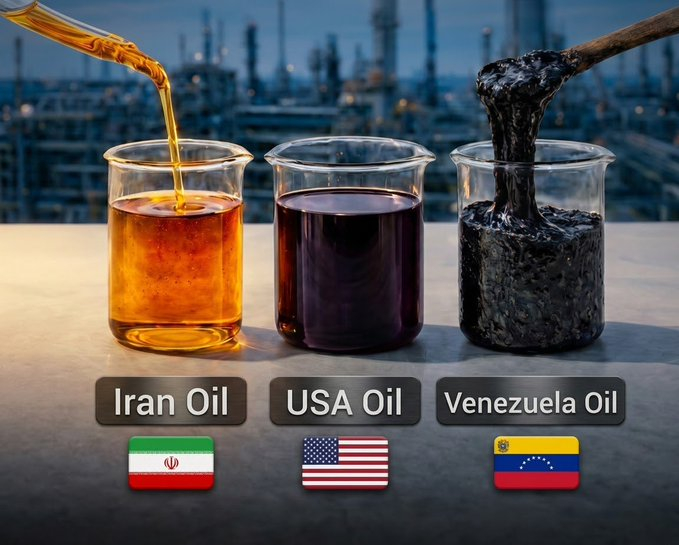
人们都在谈论伊朗石油,却没人谈论石油桶里的东西。正是这种差异,使得西方炼油厂二十年来一直通过迪拜的秘密渠道获取伊朗石油,以应对制裁。
原油并非单一商品。它是由不同分子量的碳氢化合物组成的谱系,特定原油的组成决定了其转化为炼油厂实际想要销售的产品(例如汽油、柴油、航空煤油和取暖油)的难易程度。API比重正是衡量这一特性的指标。API比重越高,原油越轻,碳链越短,这意味着裂解所需的能源成本更低,炼油加工成本更低,并且能够获得更高比例的优质轻馏分油。API比重越低,原油越重,需要更多的能源、更多的加工步骤和更多的资本设备,并且会产生更高比例的低价值残渣。
伊朗轻质原油的API度为33至36度,硫含量在1.36%至1.5%之间。这正是炼油厂的理想状态。它既足够轻,能够以较低的加工成本生产高馏分汽油和中间馏分油,又足够重,能够生产复杂炼油厂所能加工的全部产品。石油工程师称之为最佳调和原油。
现在来比较一下各种方案。
委内瑞拉梅雷重质原油的API比重约为16度,含硫量在3%至5%之间。要实现盈利炼制,需要焦化装置、加氢裂化装置和一套完整的脱硫装置。这些设备已经存在。对于专门为委内瑞拉原油建造的炼油厂来说,这种炼油方式在经济上是可行的。它不能替代伊朗原油。这是一种不同的产品,需要不同的工业基础设施。
美国西德克萨斯中质原油(WTI)的API度为39至40度,硫含量低于0.25%。理论上,它是最清洁、最易于加工的原油。但实际上,由于其分子量过轻,无法生产复杂炼油厂满负荷运转所需的重质中间馏分油。欧洲和亚洲的炼油厂以中质原油为基础建造,如果直接使用WTI,则必须将其与重质原油混合,以达到其工艺装置所需的分子量分布。WTI不能直接替代伊朗中质原油。
伊朗石油的独特之处在于,它弥补了美国页岩油和委内瑞拉重质原油的不足。这种原油无需重质原油所需的焦化设备,也无需超轻质页岩油所需的调和工序,即可在全球炼油体系中流通。正是这种分子特性使其价格持续高于同类原油。也正因如此,印度炼油厂在每一轮制裁中都坚持购买伊朗原油,并设法确保物流畅通。此外,也正是由于这种特性,阿联酋如今正考虑解散的迪拜影子银行和交易网络才得以存在。
霍尔木兹海峡不仅仅输送石油,它输送的是全球炼油系统设计之初就旨在高效加工的特定等级石油。关闭海峡不仅会减少石油供应,还会切断该系统赖以高效运转的原油等级,迫使全球所有炼油厂降低效率,转而使用任何可以找到的替代品。
这就是每桶82美元油价中所包含的溢价。不仅仅是体积,还有分子量。
Everyone talks about Iranian oil in barrels. Nobody talks about what is inside them. That difference is why Western refineries have been running shadow networks through Dubai for twenty years to get it despite the sanctions.
Crude oil is not a uniform commodity. It is a spectrum of hydrocarbons with different molecular weights, and the composition of a given crude determines how easily it converts into the products refineries actually want to sell: gasoline, diesel, jet fuel, heating oil. The measurement that captures this is API gravity. Higher API gravity means lighter crude with shorter carbon chains, which means lower energy cost to crack, lower processing cost to refine, and higher yield of the light distillates that carry premium pricing. Lower API gravity means heavier crude requiring more energy, more processing steps, more capital equipment, and producing a higher share of lower-value residuals.
Iranian Light crude runs at 33 to 36 degrees API gravity with sulfur content between 1.36 and 1.5 percent. That is the refinery sweet spot. It is light enough to yield high fractions of gasoline and middle distillates without excessive processing costs, but heavy enough to produce the full range of products that complex refineries are designed to process. It is what petroleum engineers call an optimal blend crude.
Now compare the alternatives.
Venezuelan Merey heavy crude runs at approximately 16 degrees API gravity with sulfur between 3 and 5 percent. Refining it profitably requires a coking unit, a hydrocracker, and an extensive desulfurization train. The equipment exists. The economics work for refineries purpose-built around Venezuelan feedstock. It is not a substitute for Iranian crude. It is a different product requiring different industrial infrastructure.
US West Texas Intermediate runs at 39 to 40 degrees API with sulfur below 0.25 percent. In theory, the cleanest and easiest crude to process. In practice, it is so light that it does not yield the heavier middle distillates a complex refinery needs to run at full capacity. European and Asian refineries built around medium crudes cannot switch to WTI without blending it with heavier crudes to achieve the molecular weight distribution their process units require. WTI is not a drop-in replacement for Iranian medium.
Iranian oil fits where both US shale and Venezuelan heavy do not. It is the liquid that flows through the middle of the global refining system without requiring either the coking infrastructure for heavy crudes or the blending operations for ultra-light shale. That molecular fit is why it commands a persistent premium above comparable grades. It is why Indian refineries maintained Iranian crude purchases through every round of sanctions and negotiated the logistics to keep that flow moving. It is why the Dubai shadow banking and trading network that the UAE is now considering dismantling existed in the first place.
The Strait of Hormuz does not just carry oil. It carries the specific category of oil that the global refining system was built to process most efficiently. Closing it does not just reduce supply. It removes the grade of crude that the system runs best on and forces every refinery in the world to run less efficiently on whatever it can find as a substitute.
That is the premium embedded in the $82 oil price. Not just volume. Molecular weight.
网页链接