太极画派的艺术表现形式与创新——访深圳太极拳艺馆创始人王中先生
Artistic Expressions and Innovations of the Tai Chi Painting School — An Interview with Mr. Wang Zhong, Founder of Shenzhen Tai Chi Boxing & Art Museum
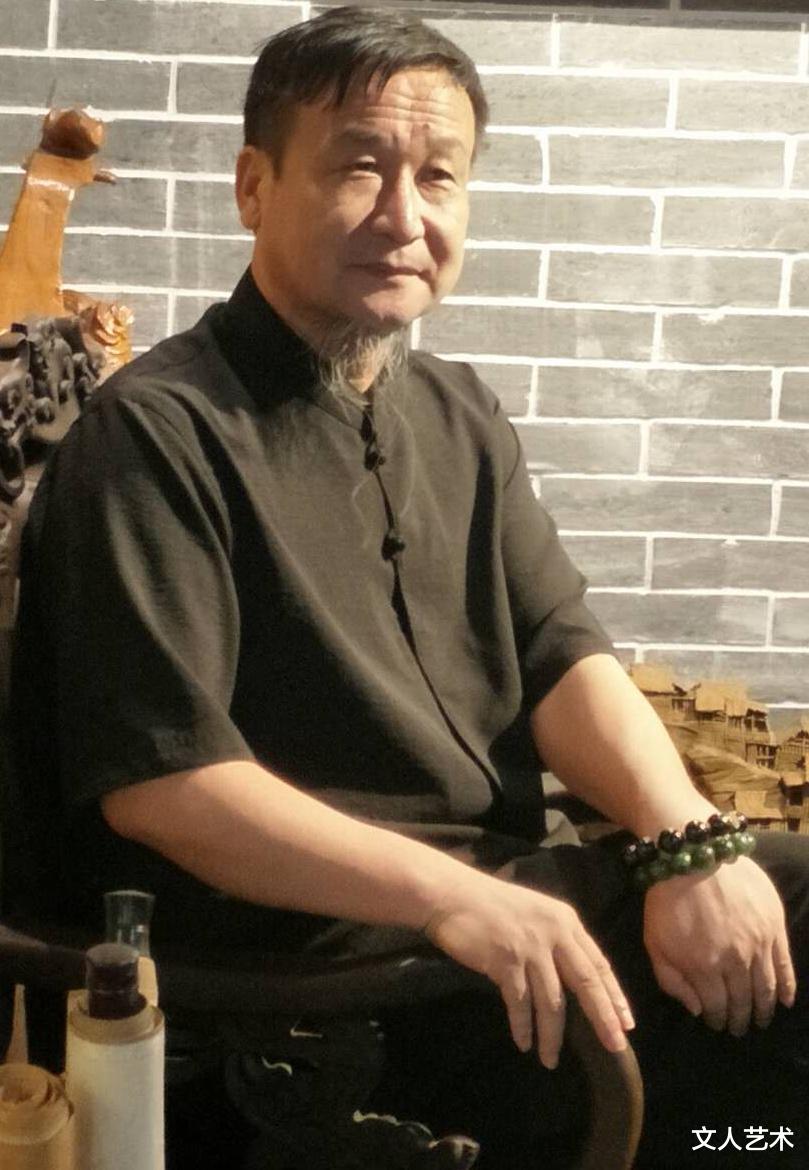
在深圳龙岗区坂田,有一方静谧的艺术天地——太极拳艺馆。这里的主人王中先生,自号“太极书生”,是一位集赵堡太极拳第十二代代表性传承人、中国武术九段、国家一级美术师、中国太极画派开创人于一身的“太极奇人”。他出生于太极拳发源地河南温县武德镇亢村,自幼与拳结缘,书画相伴,历经数十载磨砺,终于将太极拳与书画艺术深度融合,开创了独具特色的太极画派。
初见王中先生,只见他目似点漆,精气内敛,颇有仙风道骨之风范。而在这书卷气背后,更蕴含着纠纠武风——这正是允文允武的“太极书生”之象。在这次访谈中,王中先生向我们娓娓道来太极画派艺术表现形式与创新的心路历程。
In Bantian, Longgang District of Shenzhen lies a tranquil haven for art—the Tai Chi Boxing & Art Museum. Its proprietor, Mr. Wang Zhong, styles himself the "Tai Chi Literatus". He is a remarkable Tai Chi virtuoso who wears many hats: the 12th-generation representative inheritor of Zhaobao Tai Chi, a Ninth-Dan Chinese Martial Artist, a National First-Class Fine Arts Master, and the founder of China’s Tai Chi Painting School.
Born in Kang Village, Wude Town, Wen County of Henan Province—the birthplace of Tai Chi—he forged an intimate bond with Tai Chi from childhood, alongside a lifelong companionship with painting and calligraphy. After decades of dedicated cultivation, he has seamlessly integrated Tai Chi martial arts with painting and calligraphy, pioneering the distinctive Tai Chi Painting School.
Upon first meeting Mr. Wang Zhong, one is struck by his jet-black eyes and restrained vital energy, bearing an air of an ethereal immortal. Beneath his scholarly bearing lies a resolute martial spirit—the very embodiment of the "Tai Chi Literatus" balanced in letters and combat. In this interview, Mr. Wang Zhong recounts to us his spiritual journey behind the artistic expressions and innovative breakthroughs of the Tai Chi Painting School.
太极画派最核心的创新,在于将抽象的太极哲理转化为可视化的艺术语言。王中先生提出,无论太极拳还是书画,都是中国传统文化最高级的艺术养生术,以太极哲学为核心,将太极拳与书画深度融合,打造“拳画双融”的独特文化表达,让太极哲理体验化、可视化、艺术化。
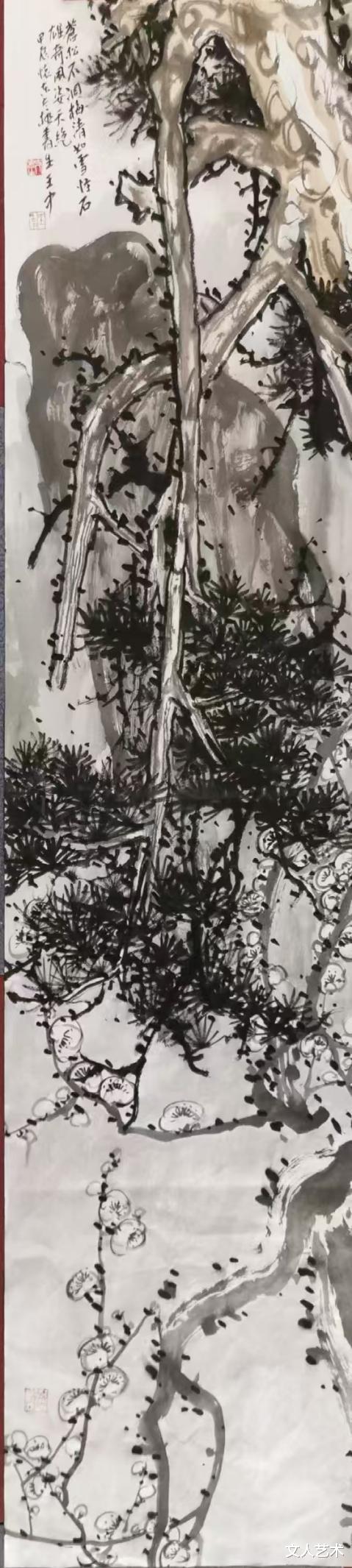
在具体表现上,王中先生将太极图中“一阴一阳谓之道”的哲学理念融入笔墨之中。他深研《易经》与道家思想,认为太极图本身就是神秘的图腾,蕴含着“意象”“物象”“道象”三个层面,这正是东方水墨艺术产生的文化思想基础。近代山水画大师黄宾虹先生曾云:“太极图是中国书画秘诀”,王中先生深以为然,他用大写意手法书写中国博大精深的太极宇宙人生观哲学,其作品皆由被抽象了的后天太极图S型太极阴阳曲线构成,这些线彼此关联,构成一个想象性空间——“大无际,小无内”,将传统书画从“气韵生动”对生命气息的追求,提升到“天地大美”及“宇宙感”的境界。
正如老子《道德经》所言:“反者道之动,弱者道之用。”王中先生的作品中处处体现着这种太极思维智慧:虚与实、轻与重、开与合、缓与急、聚与散等,都在一笔一画中找到了平衡。这种将太极哲学转化为视觉语言的能力,使得他的作品不仅是一幅画,更是一个无声的哲学篇章。
I. Visual Representation of Tai Chi Philosophy: From the Invisible to the TangibleThe core innovation of the Tai Chi Painting School lies in translating abstract Tai Chi philosophies into visual artistic language. Mr. Wang Zhong holds that both Tai Chi boxing and painting-calligraphy represent the supreme artistic regimen of traditional Chinese culture. Centered on Tai Chi philosophy, he integrates Tai Chi martial arts with painting and calligraphy to forge a distinctive cultural expression of "harmonized boxing and painting", rendering Tai Chi philosophies experiential, visual and artistic.
In terms of concrete artistic expression, Mr. Wang Zhong infuses the philosophical tenet from the Tai Chi Diagram—One yin and one yang constitute the Dao—into every brushstroke. He has delved deep into the I Ching and Taoist thought, believing the Tai Chi Diagram itself is an enigmatic totem encompassing three dimensions: imagery, physical form, and the manifestation of the Dao. This forms the ideological foundation upon which Oriental ink wash art was born. Huang Binhong, a grand master of modern landscape painting, once stated: "The Tai Chi Diagram holds the secret to Chinese painting and calligraphy." Mr. Wang Zhong wholeheartedly endorses this view. He adopts freehand grand splash-ink techniques to interpret the profound Chinese cosmic and life philosophy embodied in Tai Chi. All his artworks are structured around abstracted S-shaped yin-yang curves of the acquired Tai Chi Diagram. Interwoven and interconnected, these lines construct an imaginative dimensional space—boundlessly vast without outer limits, infinitesimally minute without inner cores. He elevates traditional painting’s pursuit of vital resonance (qiyun shengdong), the animation of life energy, to a realm embodying the supreme beauty of heaven and earth and a profound cosmic awareness.
As recorded in Laozi’s Tao Te Ching: Reversion is the movement of the Dao; softness is the function of the Dao. This wisdom of Tai Chi reasoning permeates every piece of his work. Contrasting pairs—void and solid, light and heavy, expansion and contraction, slow and swift, convergence and dispersion—achieve perfect equilibrium stroke by stroke. His unparalleled mastery of transmuting Tai Chi philosophy into visual vocabulary means his paintings are far more than mere artwork; they stand as silent, visual philosophical treatises.
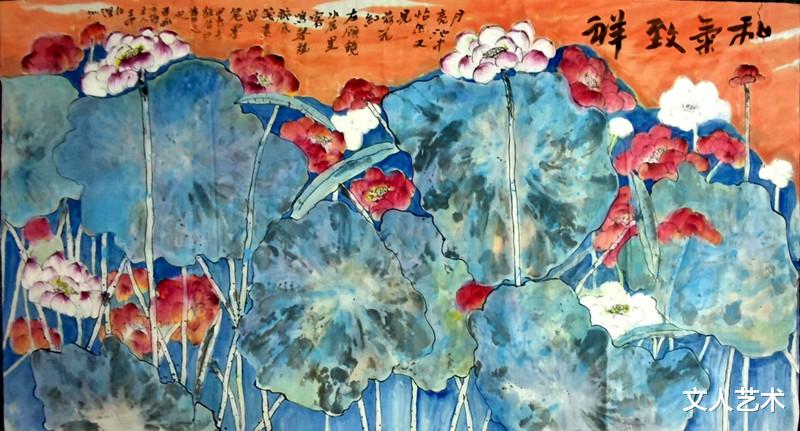
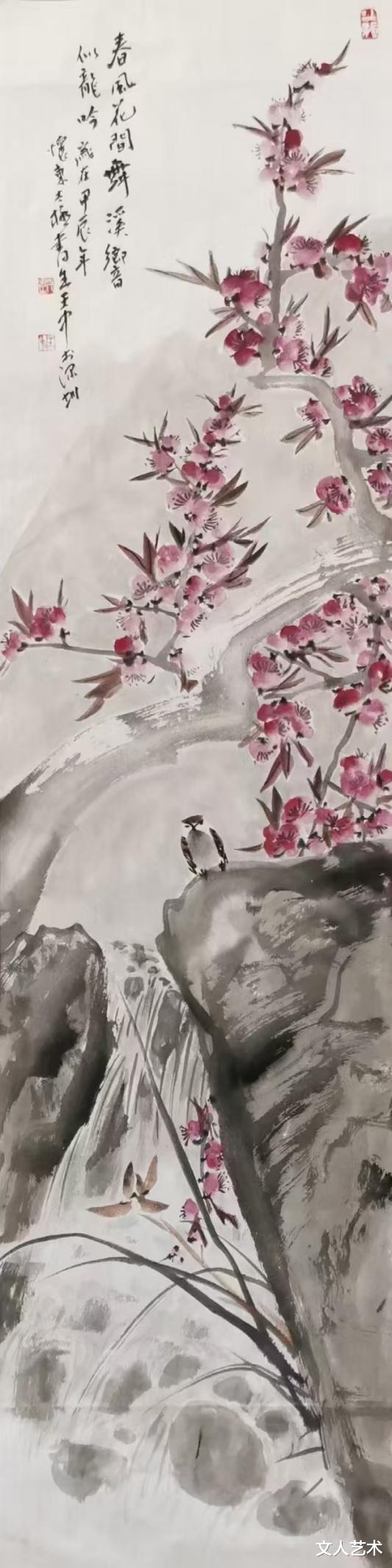
太极图特有的S形曲线以虚实隐现于作品中,成为太极画派标志性的视觉语言,也是作品中的“龙脉”与“气脉”合和。王中先生解释道:“太极画派的图式创新,不仅仅是形式上的突破,更是对传统中国画构图理论的深化”。
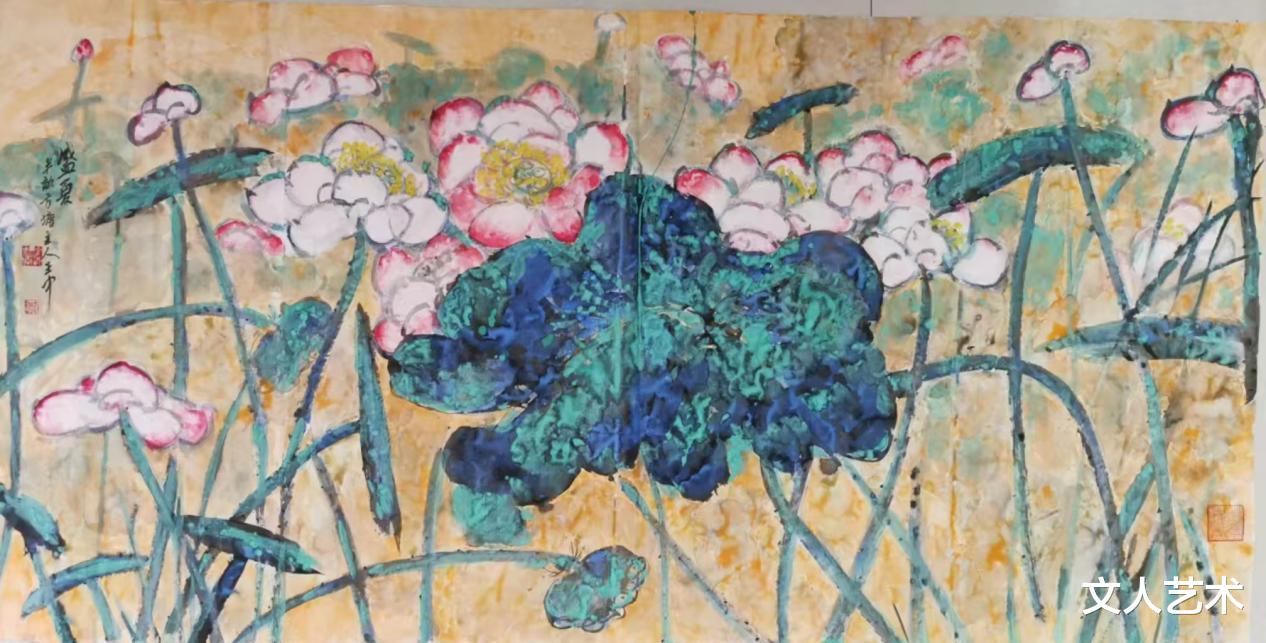
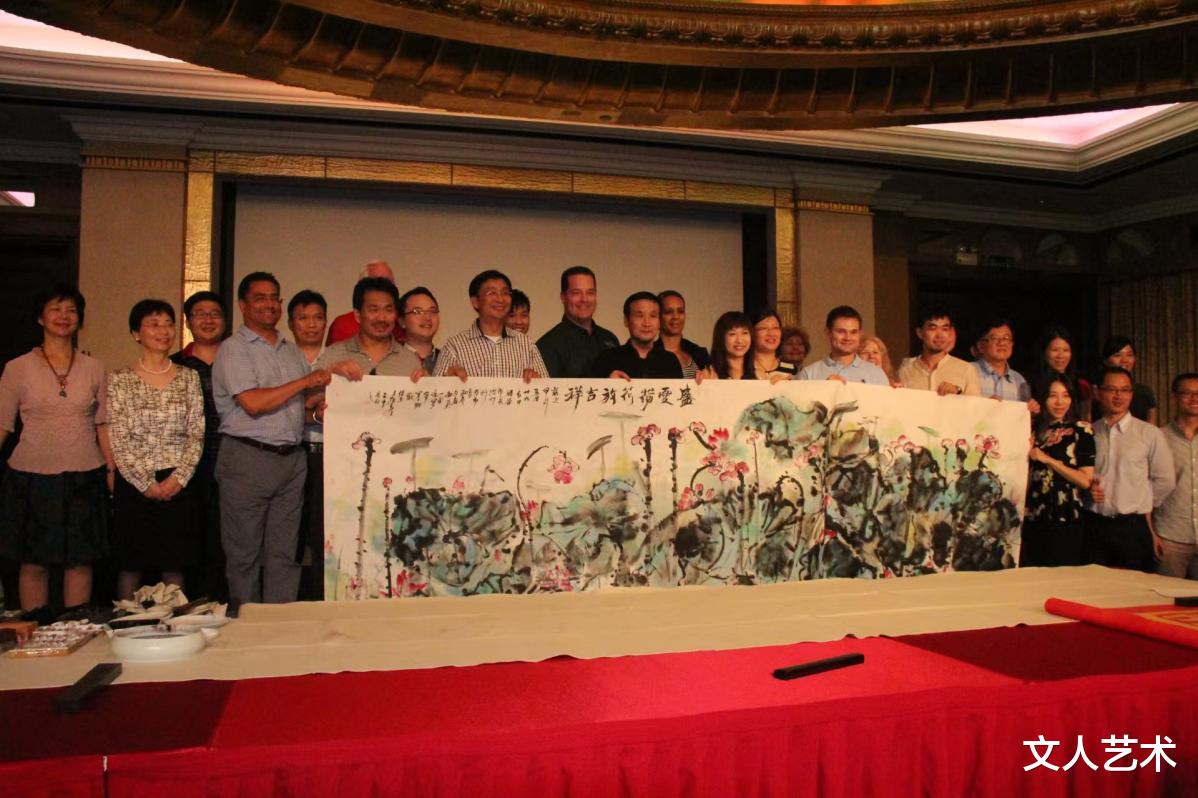
一个生动的案例令人印象深刻:2014年6月26日,美国硅谷12位市长中国行活动的最后一站在深圳举行。作为太极画派创始人的王中先生应邀出席晚宴。活动主办方安排了一个重要环节——由王中先教授12位市长学握毛笔,然后让每位市长在画卷上留下自己最有纪念意义的一笔。随后,王中先生用极短的时间,将所有人的“一笔”串联起来,运用他独特的太极艺术思维与出神入化的笔墨驾驭能力,与这些美国人现场合作完成了《盛夏荷花放吉祥》这一巨幅太极书画作品,令全场惊叹不已!这种创作方式本身就是太极图释在艺术实践中的生动体现——你中有我,我中有你,相对独立,绝对整体的太极人生观。
王中先生常采用太极图腾空象来“无中生有”。笔、墨、水、色如四灵镇守式进行创作,在整体画面上各守一方——如朱雀、玄武、青龙、白虎灵气十足,活灵活现而又深隐作品之中,无形无相。他辅以强烈的明暗色彩对比,或在同一色感画幅上亦墨亦色,自分浓淡干湿、墨幻阴阳,色幻冷暖,以太极两仪艺术手法进行画面的风格化处理,使画面呈现出玄妙神奇、如梦、如幻、如诗的新气象。
II. Innovative Application of the S-shaped Pattern of the Acquired Tai Chi DiagramThe distinctive S-shaped curves of the Tai Chi Diagram loom alternately visible and hidden amid his artworks, forming the iconic visual language of the Tai Chi Painting School, as well as the integrated "dragon vein" and "energy vein" running through each piece. Mr. Wang Zhong explains: "The formal innovation of the Tai Chi Painting School is more than a breakthrough in artistic form; it further deepens the compositional theories of traditional Chinese painting."
A vivid case remains deeply memorable. On June 26, 2014, the China Tour of twelve mayors from Silicon Valley, USA, concluded its itinerary in Shenzhen. As the founder of the Tai Chi Painting School, Mr. Wang Zhong was invited to the gala dinner. The event organizer arranged a highlight session: Mr. Wang first taught the twelve mayors how to hold writing brushes, then asked each mayor to leave a commemorative single stroke on a long scroll. Shortly afterward, drawing on his unique Tai Chi artistic philosophy and consummate mastery of brush and ink, Mr. Wang Zhong seamlessly linked all scattered strokes. Collaborating live with the American dignitaries, he completed the monumental Tai Chi painting-calligraphy work Lucky Lotus Blooms in Midsummer, astounding every audience member present. This creative method itself serves as a vivid artistic interpretation of Tai Chi worldview: each element contains the other; all parts remain relatively independent yet absolutely unified as a complete whole.
Mr. Wang Zhong often draws on the void imagery of the Tai Chi totem to create form out of emptiness. He composes paintings with brush, ink, water and pigment deployed like the Four Divine Beasts, each occupying its respective zone on the canvas. Resembling the Vermilion Bird, Black Tortoise, Azure Dragon and White Tiger, they brim with vital spirit, vivid yet subtly concealed within the painting, formless and unmanifest. He complements this with striking contrasts of light and shade, or interweaves ink and color on tonally unified surfaces, naturally generating gradations of thick, thin, dry and wet textures. Ink manifests yin and yang, while pigments unfold shifts between warm and cool hues. Stylizing the canvas with artistic techniques derived from the Two Modes of Tai Chi, he endows his paintings with an ethereal, miraculous ambience reminiscent of dreams, illusions and poetic verses.
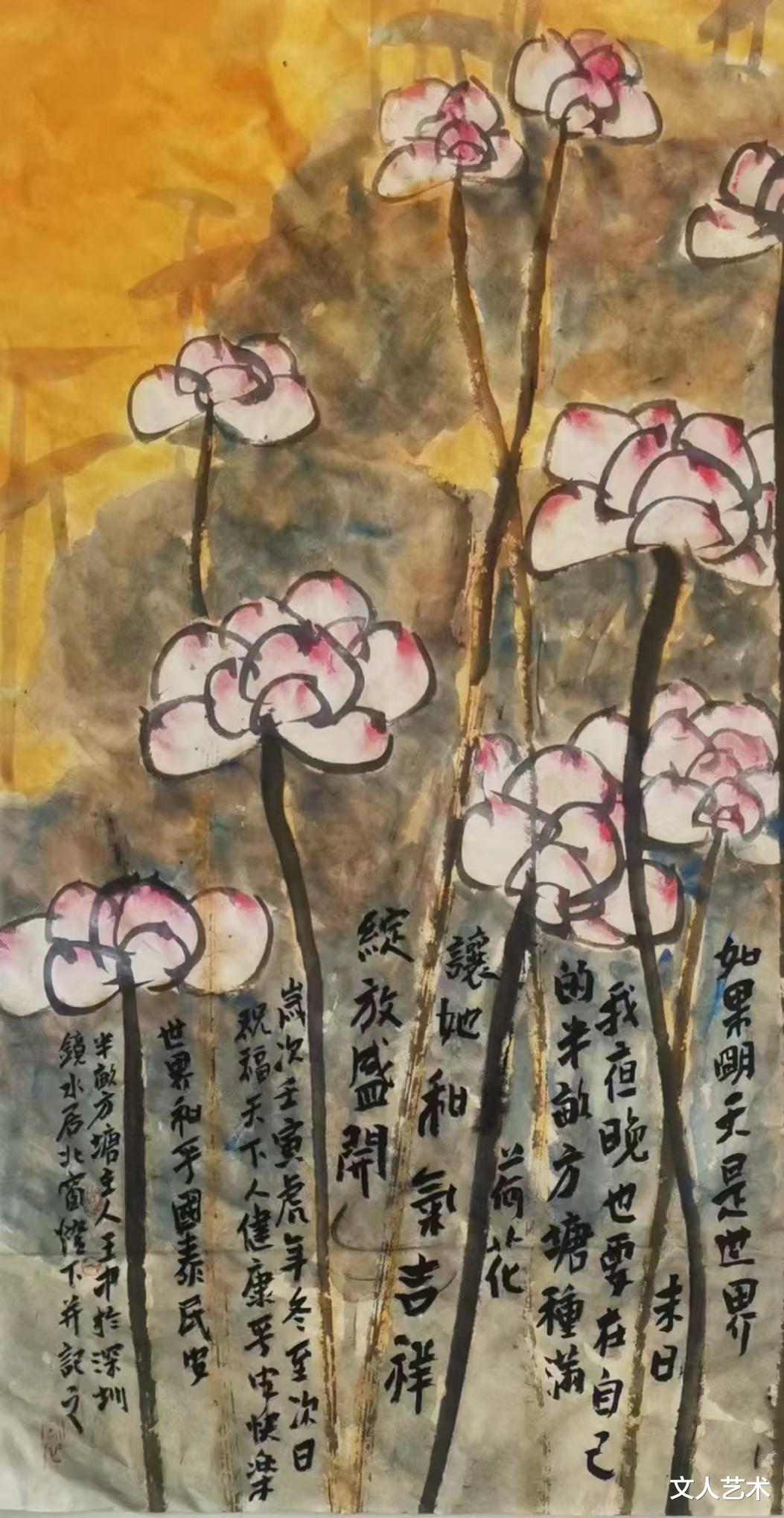
太极画派对传统绘画思维进行了突破性重构。王中先生从中国太极思维的“意象”“象意”“悟象”三个层面入手,挖掘出三种思维模型,形成了太极书画不同的艺术表现形式及审美表达。
III. Formation of the "Cosmic Vitality" Thinking System: Breakthrough Across Three RealmsThe Tai Chi Painting School brings groundbreaking reconstruction to the conceptual framework of traditional Chinese painting. Starting from the three tiers of traditional Tai Chi thinking—imagery, symbolic conception and enlightened perception—Mr. Wang Zhong extracts three corresponding modes of artistic thought, which give rise to diverse expressive forms and aesthetic manifestations unique to Tai Chi painting and calligraphy.
专业术语释义气象:Cosmic Vitality(国画语境,指画面整体气韵、天地气象,区别于日常天气)
三重境界:Three Realms
意象:imagery(东方美学通用译法)
象意:symbolic conception(由物象承载内在意蕴)
悟象:enlightened perception(悟道而生的直观体悟之象)
思维体系:thinking system
突破性重构:groundbreaking reconstruction
审美表达:aesthetic manifestations
意象思维:以主观为主、客观为辅,将具体的客观之象简约抽象化,形成“不象与象之间”的艺术状态——这是“心象”的境界。王中先生认为,这是中国传统水墨画延续两千多年的思维方法,古人从一开始创造文字与岩画时,就已经自然地运用了这种意象思维。
Imagery ThinkingCentered on subjectivity with objectivity as a supplement, it simplifies and abstracts concrete objective forms to create an artistic state "between likeness and unlikeness" — this constitutes the realm of mental imagery. According to Mr. Wang Zhong, this mode of thinking has sustained traditional Chinese ink wash painting for over two thousand years. Since the very dawn of character creation and rock painting, ancient Chinese people have instinctively adopted this imagery-based mindset.
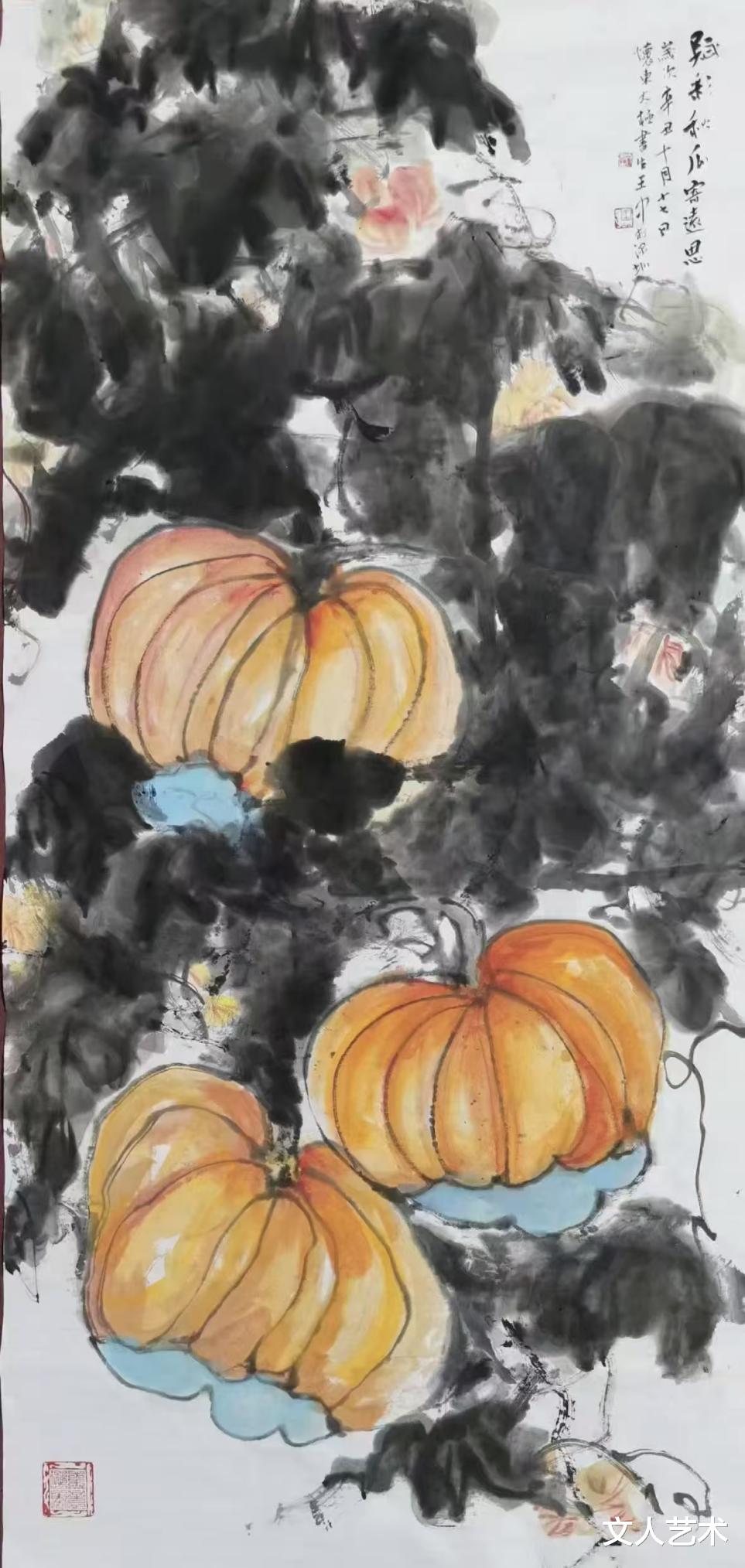
象意思维:强调客观之象的意识,将主观之意作为辅助,形成“象与不象之间”的艺术表现形式——这是“空象”的境界。在象意思维中,“象”在前,“意”在后,以客观“象”为主,以主观“意”为辅,从而加强对客观“象”的描绘以及艺术的表现力。
Symbolic Conception ThinkingIt emphasizes the consciousness of objective forms, with subjective conception serving as a complement, yielding an artistic expression "between likeness and unlikeness" — this is the realm of void imagery. Within this mode of thinking, form precedes meaning: objective shapes take precedence while subjective intent plays a supporting role. This approach intensifies the depiction of objective forms and elevates the expressive power of art.
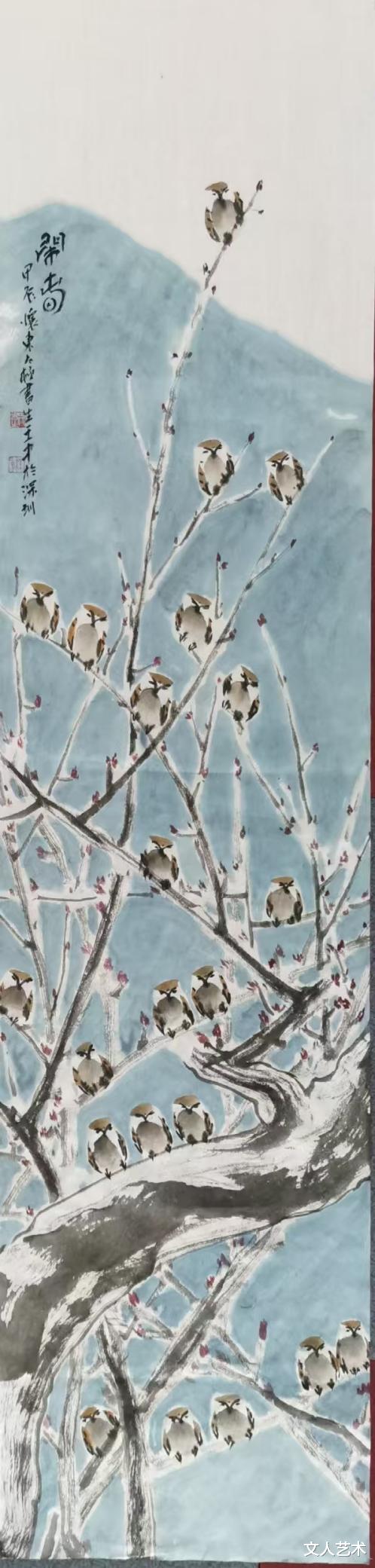
悟象思维:阴阳两象相合和升华而出的超觉思维,是即有形又无形、即“似象非象,让人想象”的创作境界——这是“气象万千”的境界。王中先生指出:这是由阴阳相合和升华出的“道象”,是超越了人的入世思维之象,是人所悟到的“大象”。以“悟象”超觉思维创造出来的太极新水墨艺术作品,是在有与无之间变化着笔墨的状态与情绪,然又不失其丰富的绘画内容和遐思的艺术内涵。
It is a transcendent intuitive thinking evolved from the integration and sublimation of yin and yang imagery, embodying a creative realm both tangible and intangible—“resembling form yet beyond form, stirring boundless imagination”. This is the realm of boundless cosmic vitality.
Mr. Wang Zhong points out that this Dao imagery emerges from the fusion and elevation of yin and yang. It transcends the worldly perceptual imagery of human cognition and stands as the grand imagery realized through spiritual enlightenment.
New Tai Chi ink wash works conceived via this transcendent enlightened perception thinking manipulate brush and ink to shift between existence and void, conveying subtle moods while retaining rich pictorial substance and evocative artistic profundity that invites endless reverie.
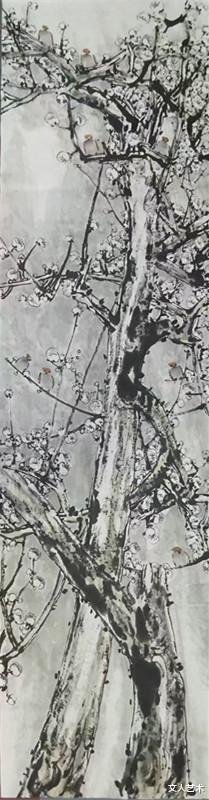
正是这种独特太极思维体系的形成与构建,为太极画派提供了系统的创新理论基础和创作方法论。王中先生意味深长地说:“传智慧、传思想、传文化,比传一招一式更重要。”太极画派正是以传统古老太极哲学为内核,通过艺术的方式让修炼太极的人更形象地认识祖国传统文化艺术,从中把“天地大美”和“审美格局”融入太极书画之中。
It is the formation and construction of this unique Tai Chi thinking system that furnishes the Tai Chi Painting School with a systematic theoretical foundation and creative methodology for its innovations.
Mr. Wang Zhong remarked with profound insight: "Passing on wisdom, ideas and culture matters far more than merely teaching individual boxing postures and movements."
Centered on the ancient traditional Tai Chi philosophy, the Tai Chi Painting School enables Tai Chi practitioners to gain a vivid understanding of China’s traditional culture and arts through artistic expression. It integrates the supreme beauty of heaven and earth as well as lofty aesthetic vision into Tai Chi painting and calligraphy.
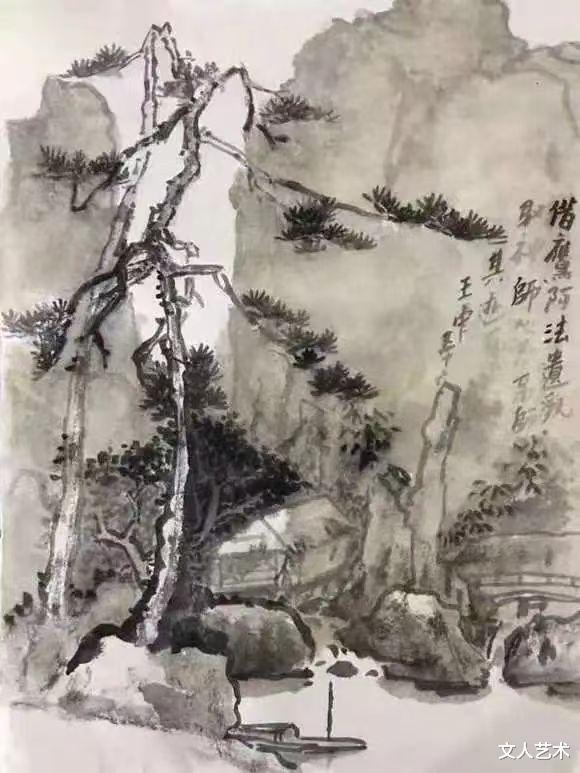
在色彩运用上,太极画派突破了传统国画的藩篱。王中先生创立了“色即是墨、墨即是色,色即是空、空即是象,阴阳五行,相生相克”的太极新水墨色与墨理论,结合宣纸水、色、墨的天然肌理及笔痕踪迹,在画面上自然而然生成相生相克、反克亢乘的新视觉哲学审美体悟——“因时而动,因势而动”,顺遂自然,顺其自然中“因敌变化示神奇”。作品常常出现“既在预料之中,又出乎意料之外”的圆满完美与惊喜!
这种色彩体系既溯源唐五代金碧山水画的华美富丽,水墨又汲取了宋画山水的严谨精微,同时融合东西方绘画的精义。然而,王中先生强调:深耕其中所独创的艺术美学新疆域显然更为重要。他的作品“既传统又现代,既中国又世界”,形成了独特的当代中国画艺术美学风格。
王中先生特别注重借鉴西方艺术光感和色彩的运用,借光感捕灵感贯通于天地间以求大美,将灵光以色墨叠染于韵律中,在冷暖阴阳中力求整体画面的和谐完美。无论是晴空日照还是星沉月朗,画中的山水、田野、花草、禽鸟都在和谐自然之美中整体合和,极具人性与天性的完美融合。
IV. The Philosophical Application of Yin-Yang in Color and Ink WashIn its use of color, the Tai Chi Painting School breaks free from the constraints of traditional Chinese painting. Mr. Wang Zhong founded a new Tai Chi ink theory of color and ink, which states: Color is ink, and ink is color; color is void, and void is form. Yin, yang and the Five Elements generate and restrain one another. Drawing on the natural textures and brush traces left by water, pigment and ink on rice paper, his paintings spontaneously unfold a new visual philosophical aesthetic embodying generation, restraint, over-restraint and rebellion among the Five Elements. The art moves in response to time and momentum, aligning fully with nature, revealing marvelous transformations that adapt to shifting conditions. His works consistently deliver a perfect, satisfying harmony paired with delightful surprises—predictable in essence yet full of unexpected wonders.
This color system traces its origins to the opulent splendor of golden-and-green landscape paintings of the Tang and Five Dynasties, while its ink techniques absorb the meticulous precision of Song-dynasty landscape art. It also integrates the quintessence of both Eastern and Western painting. Nevertheless, Mr. Wang Zhong stresses that far greater significance lies in the brand-new artistic aesthetic realm he pioneered through profound immersion in this system. His works are simultaneously traditional and contemporary, inherently Chinese yet universally global, forging a distinctive aesthetic language for modern Chinese painting.
Mr. Wang Zhong particularly draws lessons from the handling of light and color in Western art. He captures creative inspiration through luminous energy permeating heaven and earth in pursuit of supreme beauty, layering radiant light via repeated washes of ink and pigment within rhythmic brushwork, and striving for holistic pictorial harmony through the interplay of warm and cool yin-yang tones. Whether depicting bright sunlight under clear skies or tranquil moonlight beneath starry firmaments, the mountains, fields, flowers, plants, birds and beasts within his compositions converge in seamless natural harmony, achieving an exquisite fusion of human temperament and innate cosmic nature.
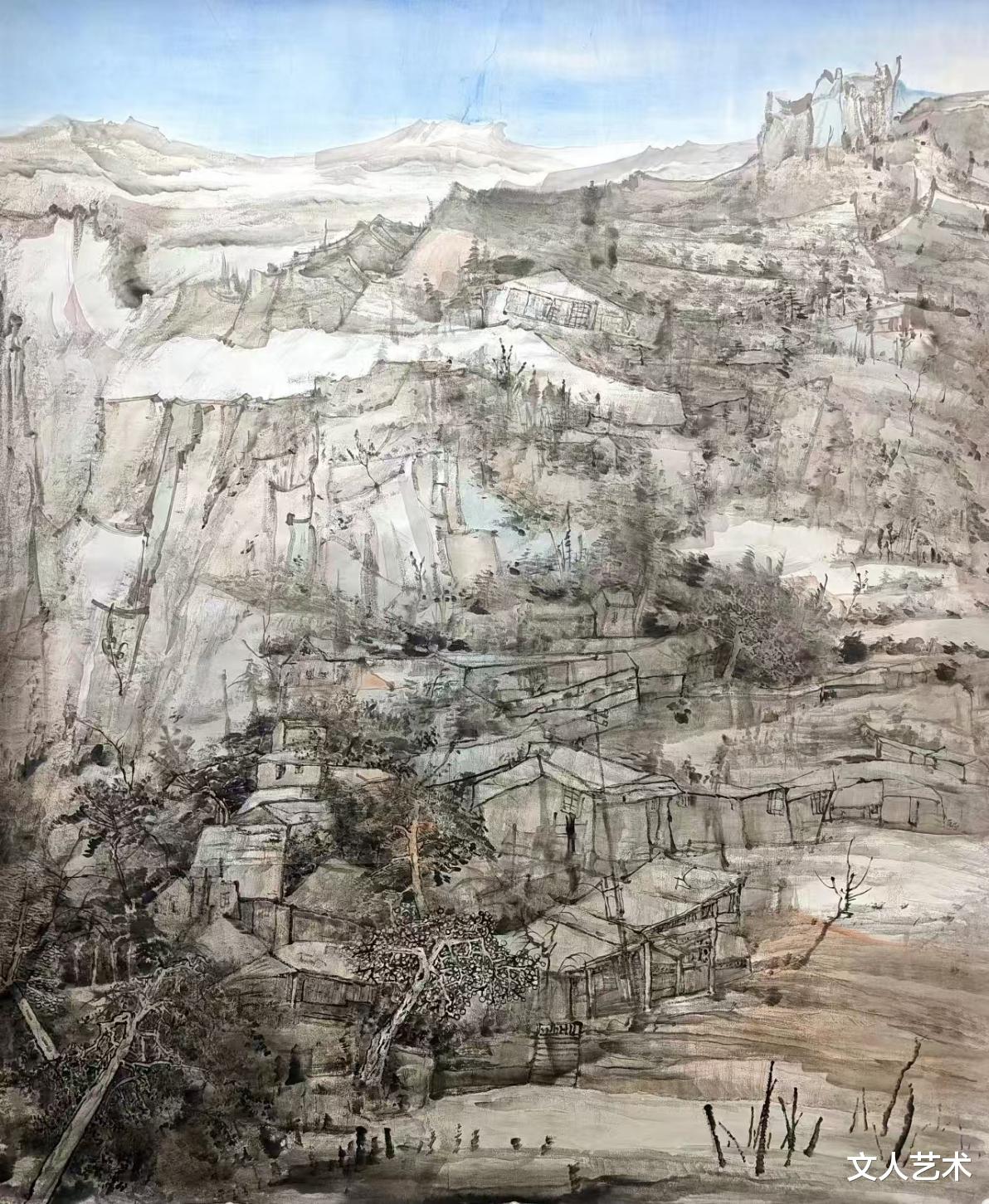
王中先生创立的太极画派特别强调“拳画融通”的互动性。他将太极思想智慧——“你中有我、我中有你,相对独立、绝对整体,掌握结点、顺势而为”。具体运用于”每人各具一太极”、“人人都是艺术家”的亲身体验与实践模式,让参与者更近距离地深入感受与体验中国传统文化艺术的神奇魅力。
“太极拳所要求的虚实、轻重、开合、缓急、刚柔,都可以在一线一点中开辟出一个相对独立的艺术新天地。”王中先生如是说。这种创作理念打破了传统书画的个人静态创作模式,将太极拳的“玩耍”体验融入书画创作之中。他在画画时,每一笔一划、一点一顿皆是太极意韵;一勾一勒,此起彼伏、虚实开合、抑扬顿挫,也像太极一样皆于阴阳平衡之中,始终不离圆润融合一团和气。
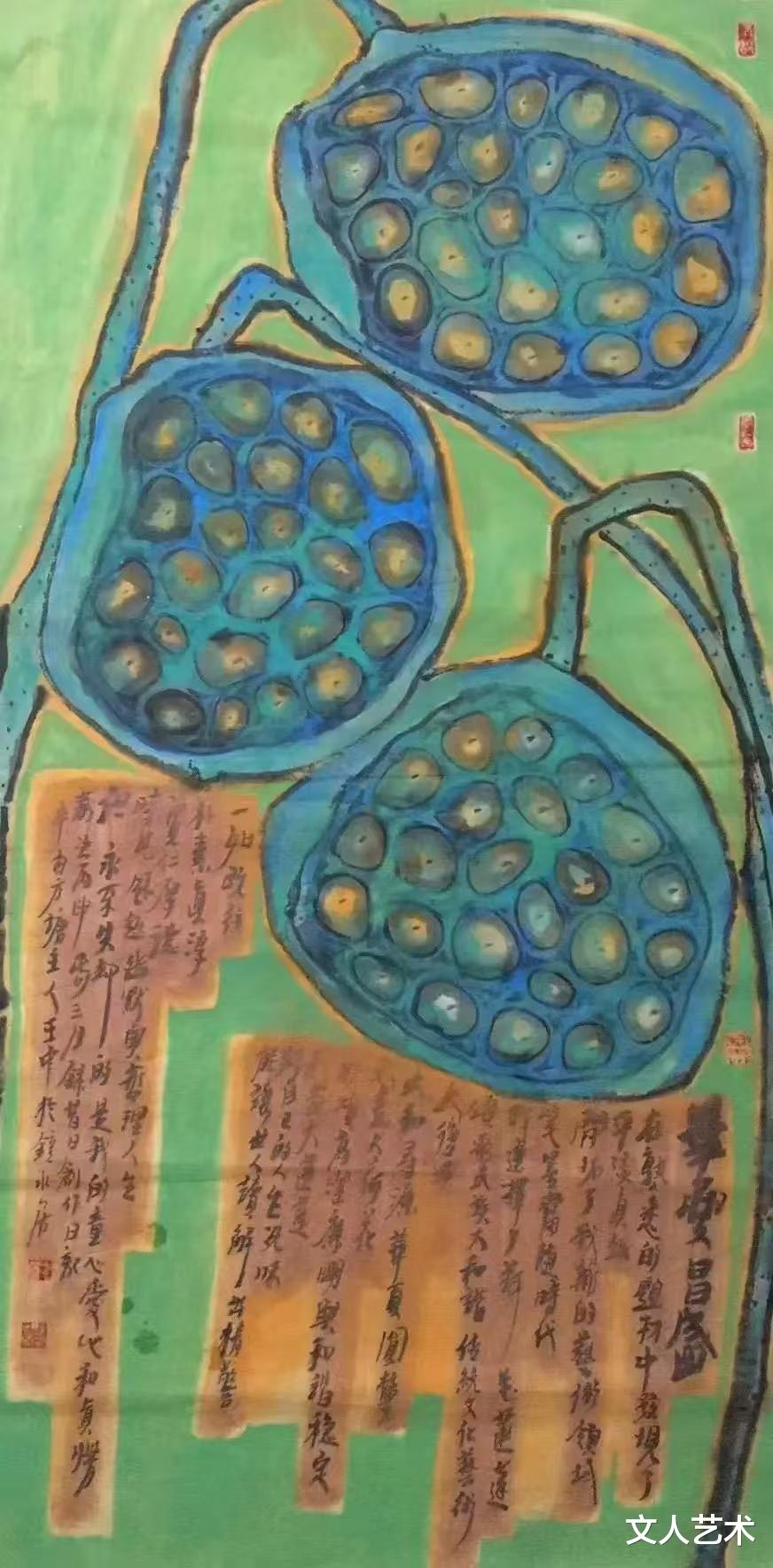
尤其值得一提的是王中先生笔下画的莲蓬——大圆圈里套着几个小圆圈,显示出“人体小宇宙与宇宙大智慧”,简单几笔就将具体的荷花物象立刻转换为抽象的象征意义,气象万千,让人感到眼前亮堂,使人进入无尽的时空遐想中。这种将太极拳的灵动与书画的沉静融为一体的创作方式,正是太极画派区别于古人与今人的独特魅力所在。
V. Interactive Creation Mode of Integrated Tai Chi Boxing and PaintingThe Tai Chi Painting School founded by Mr. Wang Zhong lays special emphasis on the interactivity of "integrated boxing and painting". He applies the wisdom of Tai Chi philosophy—Each contains the other; relatively independent yet absolutely unified as a whole; grasp the pivotal points and act in accordance with the momentum—to an experiential practice model based on the tenets that "Everyone carries a Tai Chi within themselves" and "Everyone is an artist". This allows participants to closely perceive and experience the enchanting charm of traditional Chinese culture and arts.
"What Tai Chi boxing demands—void and solid, light and heavy, opening and closing, slow and swift, firm and gentle—can unfold a relatively independent new artistic realm through every single line and dot," Mr. Wang Zhong states. This creative philosophy breaks the conventional static individual creation mode of traditional painting and calligraphy, and infuses the playful, immersive experience of Tai Chi practice into artistic creation. When he paints, every stroke, dot and pause brims with Tai Chi charm. All outlines rise and fall, shift between void and solid, and flow with rhythmic cadence. Just like Tai Chi, they abide by the balance of yin and yang, always maintaining mellow harmony and serene unity.
Particularly noteworthy are the seed pods of lotus depicted in his works: several small circles nested within a large circle, embodying the notion that "the human body is a miniature universe holding the profound wisdom of the cosmos". With just a few concise strokes, the tangible imagery of lotus flowers transforms into abstract symbolic meaning, unfolding boundless cosmic vitality that brightens viewers’ minds and stirs endless reveries of time and space. This creative method, which fuses the agility of Tai Chi boxing with the tranquility of painting and calligraphy, constitutes the distinctive allure that sets the Tai Chi Painting School apart from both ancient and contemporary artists.
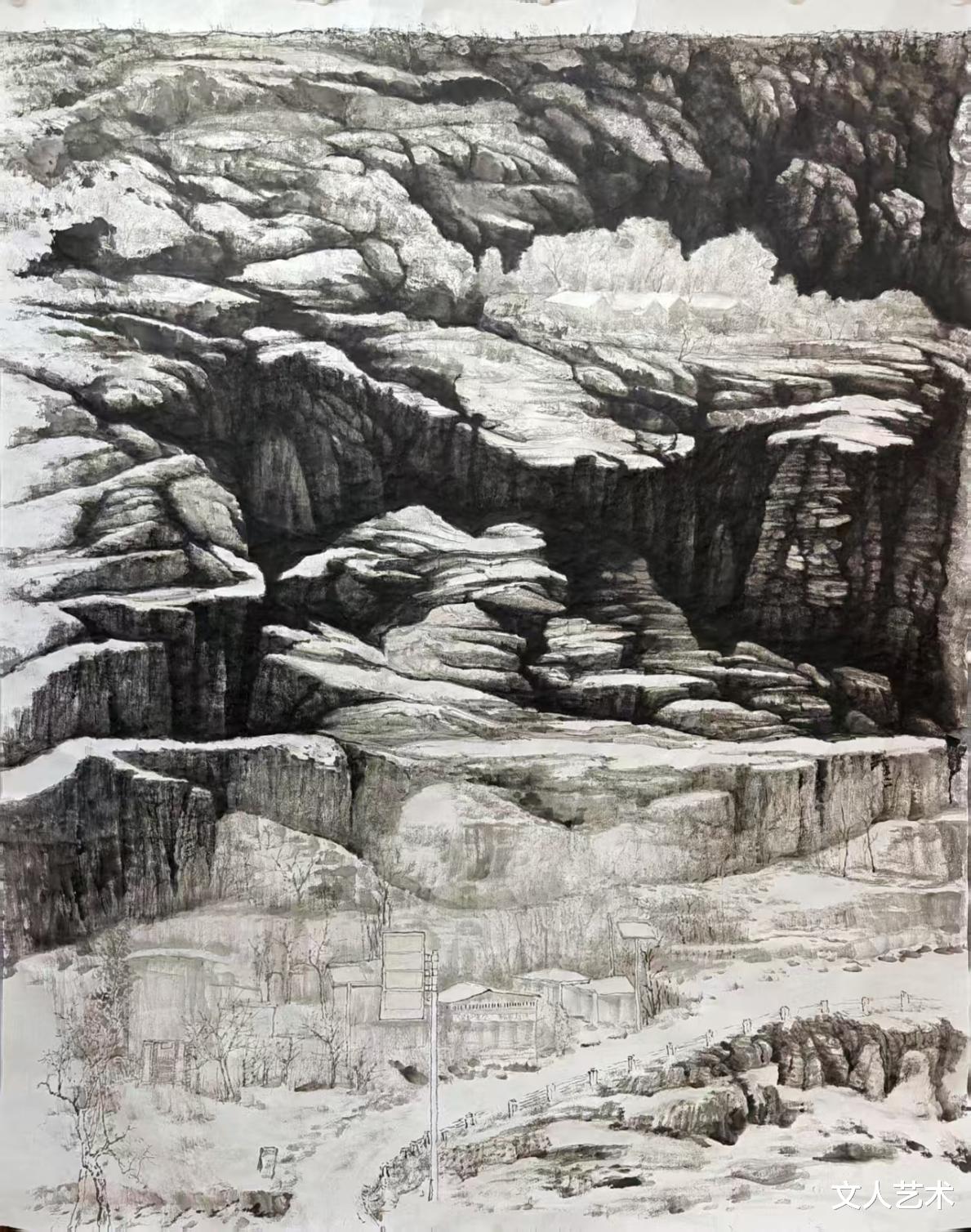
太极画派的艺术创新并非简单的技法突破,而是从“道”的层面对中国传统文化进行深度挖掘与现代表达。正如王中先生所认为的,“当代中国画的创新,首先要破除现有的执念‘术’,立足于中国传统文化土壤,在中国传统的思想源头与根蒂所在的道家思想处从“道德”的层面深入研究”。太极画派的探索,正是将太极之道转化回归为可视、可感、可悟的传统文化艺术新“检验”,为当代中国传统书画的创新提供了独特的路径和范式。
Conclusion: Rebirth of Art — From Skill to the DaoThe artistic innovations of the Tai Chi Painting School are far more than mere breakthroughs in painting techniques; they represent an in-depth exploration and contemporary interpretation of traditional Chinese culture rooted at the level of the Dao. As Mr. Wang Zhong observes: “To innovate modern Chinese painting, we must first let go of our rigid attachment to superficial skills. We should take root in the soil of traditional Chinese culture and conduct profound research on morality and the Dao from Taoism — the wellspring and fundamental origin of China’s traditional thought.”
The explorations of the Tai Chi Painting School translate the Dao of Tai Chi into a new tangible cultural artistic medium that can be seen, felt and spiritually comprehended. It offers a unique approach and paradigm for the innovative development of modern traditional Chinese painting and calligraphy.
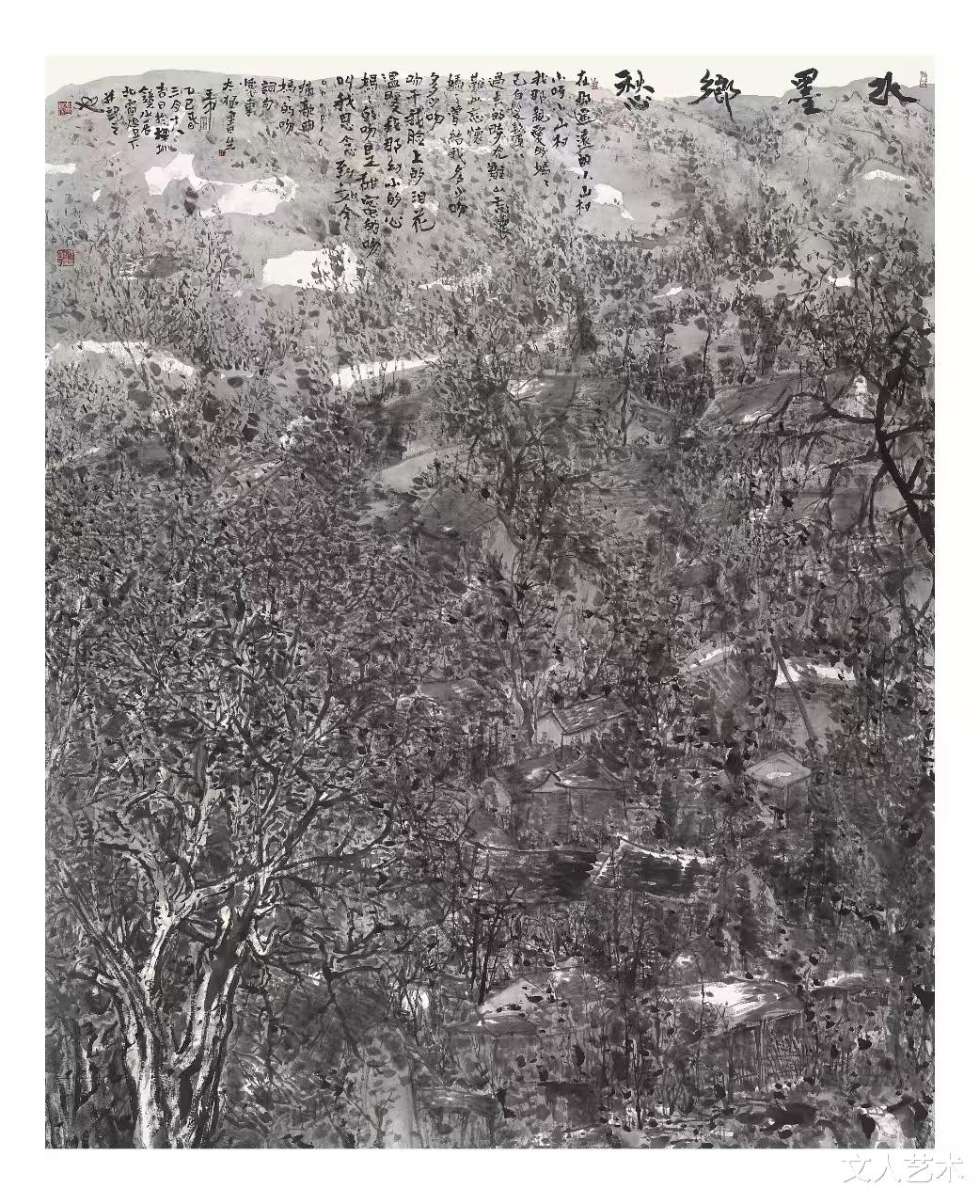
访谈最后,王中先生以他特有的太极哲思寄语后学:“人生小满胜万全,艺术之道亦如是。愿每一位追求艺术的人,都能在‘意象’与‘象意’之间找到自己的‘悟象’,在笔墨与拳脚之间,寻得那份天人合一的大自在。”
夜幕降临,华灯初上。深圳太极拳艺馆内,王中先生挥毫泼墨,太极之势与笔墨之韵浑然一体,仿佛一幅流动的太极图正在宣纸上徐徐展开——那是中国传统文化在当代焕发出的崭新活力,也是太极画派在祖国深圳这片热土上生生不息自强不息的见证。
岁次丙午小满 王建邦于宁夏永宁书画院
At the close of the interview, Mr. Wang Zhong shared a message for younger practitioners imbued with his unique Tai Chi philosophy: "Partial fulfillment in life surpasses absolute perfection, and the path of art follows the same truth. May every art seeker discover their own enlightened imagery amid conceptual imagery and symbolic conception. Between brush-and-ink art and Tai Chi boxing movements, may you attain the supreme freedom of harmony between humanity and heaven."
Night fell and city lights flickered to life. Inside Shenzhen Tai Chi Boxing & Art Museum, Mr. Wang Zhong wielded his brush freely. The momentum of Tai Chi merged seamlessly with the charm of ink strokes, as if a flowing Tai Chi Diagram unfolded gently upon the rice paper. It embodies the vibrant new vitality of traditional Chinese culture thriving in the contemporary age, and stands testimony to the enduring, self-improving vitality of the Tai Chi Painting School rooted in the vibrant land of Shenzhen.
Written by Wang Jianbang at Ningxia Yongning Painting and Calligraphy Academy, Minor Full Solar Term, the Bingwu Year.