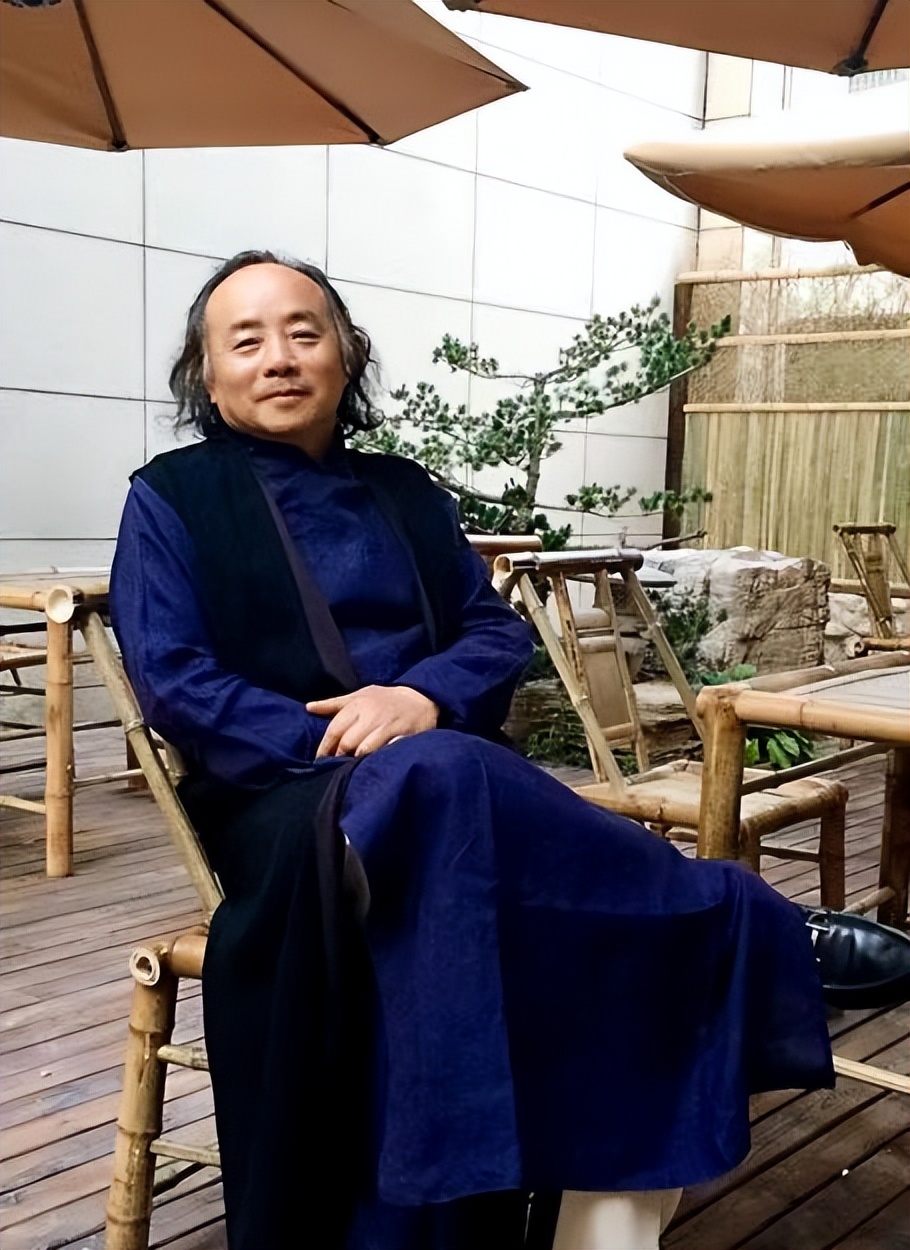
韩天雍,1957年生于辽宁沈阳,著名书法家、篆刻家、金石学家、书法教育家,中国美术学院书法艺术学院教授、博士生导师。他兼具语言文学与书法专业的深厚学养,1984年毕业于辽宁大学外国语言文学专业,1992年获浙江美术学院(现中国美术学院)国画系文学硕士学位,师从沙孟海、刘江教授;2001年获首都师范大学中国书法研究院文学博士学位,师从欧阳中石教授。跨学科的学术背景,为其在中日书法比较研究领域的深耕奠定了坚实基础。
作为中日书法交流的先行者,韩天雍自1998年起应日本文部省邀请,赴日本岐阜女子大学及多所大学讲学十二年,并在筑波大学、大东文化大学、北海道大学、关西大学等高校举办学术讲座,将中国书法、篆刻文化传播至日本,同时深入研究日本书道史,成为该领域具有影响力的学者之一。他的学术研究贯通中日,以比较学方法揭示两国书法艺术的历史渊源与相互影响。
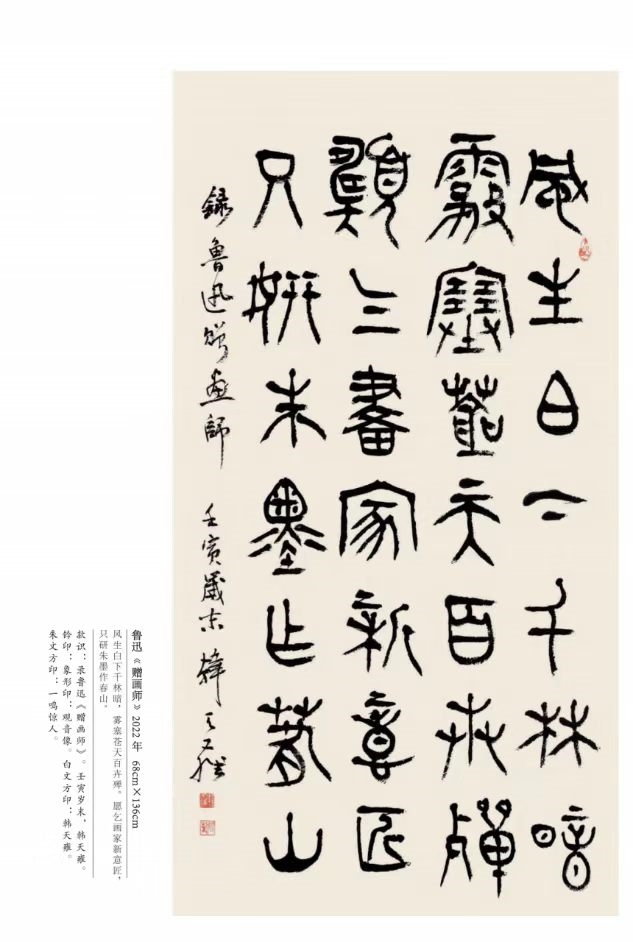
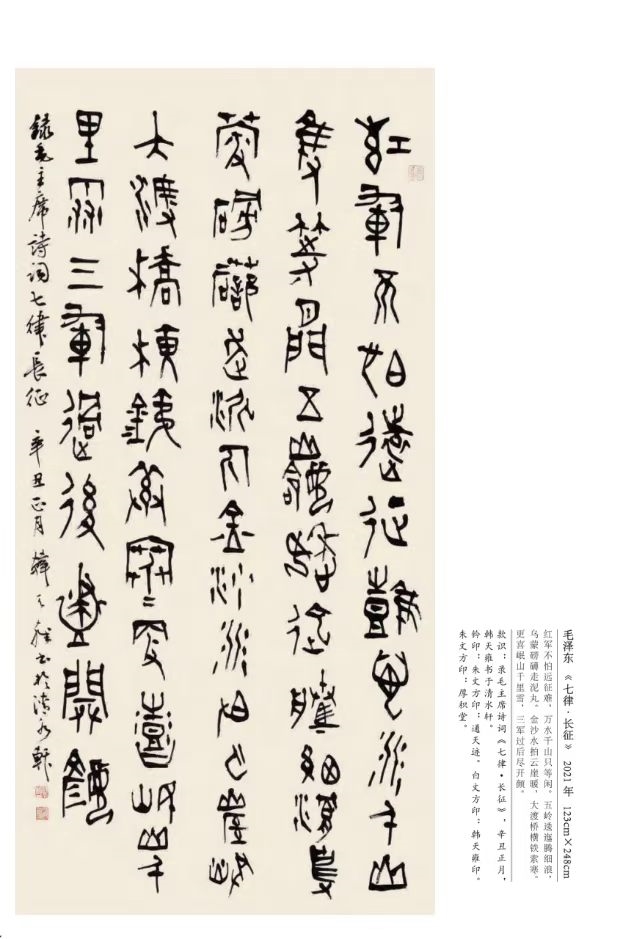
韩天雍的书法以大篆闻名。他将甲骨文、金文、石鼓文、小篆等古文字系统熔于一炉,作品“大气磅礴、拙中见雅”,既有古文字的朴茂雄深,又具时代审美的现代意识。其创作注重以古体发新声,以古意抒性灵,探索古文字书法的当代转化。
在学术研究领域,韩天雍著述丰硕,主要著作有《日本篆刻艺术》《佛教写经》《三笔三迹》《中日禅宗墨迹研究》《日本书道史》《中国历代名家篆刻边款释文集成》《吴昌硕篆刻》以及《韩天雍大篆》系列法帖十种。此外,他还出版个人作品集十余种,发表核心期刊论文三十余篇。其中《中日禅宗墨迹研究》获2008年度国家"十一五"课题社科艺术基金奖;《中国历代名家篆刻边款释文集成》获2024年"世纪好书"奖。作为策展人,他主持策划了多项全国性古文字书法大展,为古文字书法的当代传承搭建了学术交流平台。
中国美术学院教授刘江曾评价其书法:“骨势洞达,气格雄强,血肉相生,气骨兼备……有传统又别于传统,有取他人之长又别于他人,沿着自己的道路前进。”韩天雍的作品被中国美术馆、国家钓鱼台国宾馆、中国国家画院等多家艺术机构收藏。
从师从沙孟海、刘江到问道欧阳中石,从东瀛讲学到著书立说,韩天雍以数十年学术坚守与艺术探索,贯通了古文字书法的传统精神与当代审美,让古老的甲骨金文在当代焕发新生,以学术的高度与艺术的温度,书写着当代书法家的文化担当。
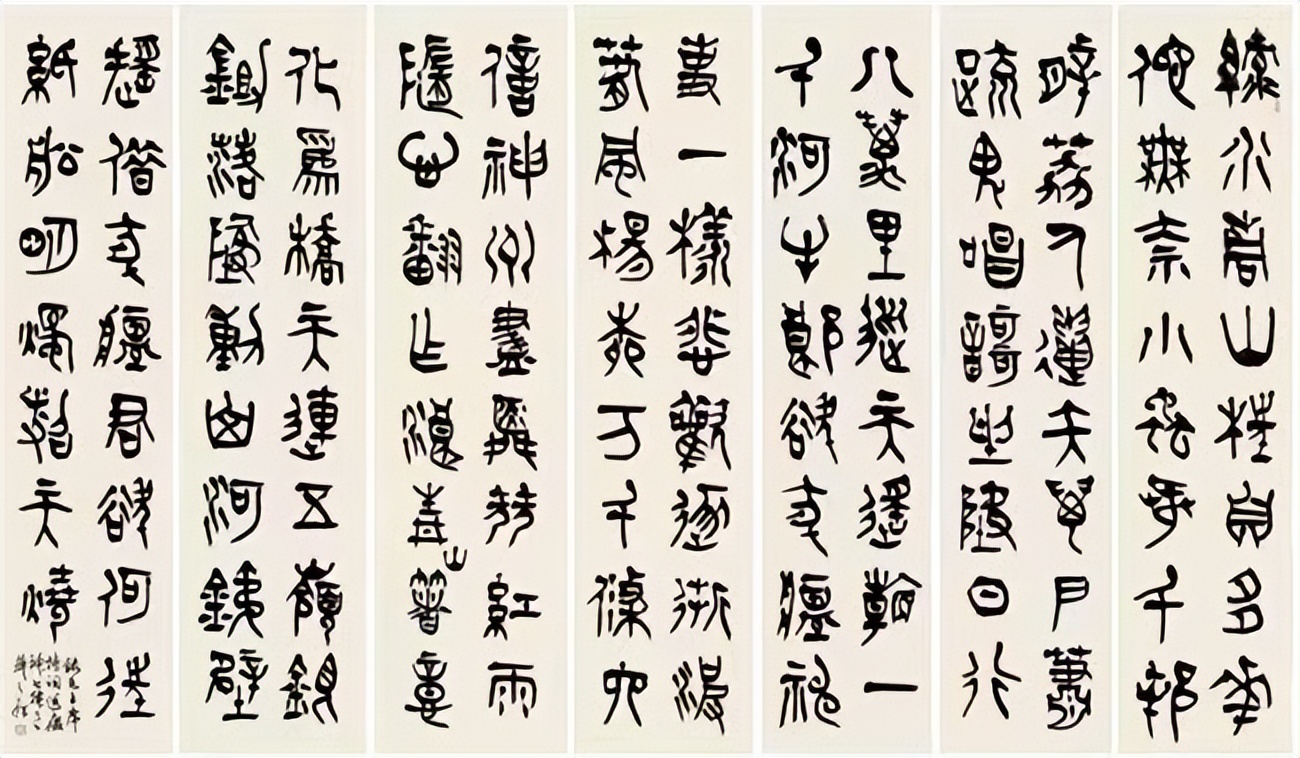


Han Tianyong, born in 1957 in Shenyang, Liaoning, is a and doctoral supervisor at the School of Calligraphy Art of the China Academy of Art. He possesses profound academic knowledge in both language, literature, and calligraphy. He graduated from Liaoning in 1984 with a major in Foreign Languages and Literature, and in 1992, he obtained a Master of Arts degree from the Department of Chinese Painting at Zhejiang Academy of Fine Arts (now the China Academy of Art), studying under Professors Sha Menghai and Liu Jiang. In 2001, he earned a Doctor of degree from the Chinese Calligraphy Research Institute of Capital Normal University, studying under Professor Ouyang Zhongshi. This interdisciplinary academic background laid a solid foundation for his deep cultivation in the of comparative research on Chinese and Japanese calligraphy. As a pioneer in Chinese-Japanese calligraphy exchange, Han Tianyong was invited by the Japanese Ministry of Education, Culture, Sports, and Technology in 1998 to teach at Gifu Women's University and several other universities in Japan for twelve years. He also held academic lectures at universities such as University of Tsukuba, Daito Bunka University, Hokkaido University, and Kansai University, promoting Chinese calligraphy and seal carving culture in Japan. At the same time, he conducted-depth research on the history of Japanese calligraphy (Shodo), becoming one of the influential scholars in this field. His academic research spans both China and Japan, using comparative methods reveal the historical origins and mutual influences of the calligraphic arts of the two countries. Han Tianyong's calligraphy is renowned for its "Dazhuan" (large script). He integrates ancient writing systems such as oracle bone script, bronze script, stone drum script, and small seal script into his work. His creations are "magnificent and elegant their simplicity," possessing both the primitive vigor of ancient scripts and the modern consciousness of contemporary aesthetics. His creative approach emphasizes using ancient styles to express new voices and ancient meanings to convey spiritual, exploring the contemporary transformation of ancient script calligraphy. In the field of academic research, Han Tianyong has a prolific body of work. His major publications include *Japanese Seal Car Art*, *Buddhist Sutra Copying*, *Sanbi Sanji*, *Research on Zen Ink Traces in China and Japan*, *History of Japanese Calligraphy*, *Collection Deciphered Marginal Inscriptions of Famous Seal Carvers in China Through the Ages*, *Wu Changshuo's Seal Carving*, and ten volumes of the *Han Tian Dazhuan* series of model books. In addition, he has published over ten collections of his own works and published more than thirty papers in core academic journals. Among them *Research on Zen Ink Traces in China and Japan* won the 2008 National "11th Five-Year Plan" Social Science and Art Fund Award, *Collection of Deciphered Marginal Inscriptions of Famous Seal Carvers in China Through the Ages* won the 2024 "Century's Best Book" Award. a curator, he has hosted and curated several national exhibitions of ancient script calligraphy, building an academic exchange platform for the contemporary inheritance of ancient script calligraphy. Liu Jiang, a professor the China Academy of Art, once evaluated his calligraphy: "The skeletal structure is penetrating, the spirit and style are powerful, the flesh and blood are mutually generated, and it both spirit and bone... It has tradition yet differs from tradition, adopts the strengths of others yet differs from others, moving forward along its own path." Han Tianyong's works collected by multiple art institutions, including the National Art Museum of China, the State Guesthouse Diaoyutai, and the China National Academy of Painting. From studying under Shaghai and Liu Jiang to seeking guidance from Ouyang Zhongshi, and from teaching in Japan to writing books and establishing theories, Han Tianyong has integrated the traditional spirit and contemporary of ancient script calligraphy through decades of academic perseverance and artistic exploration. He has allowed the ancient oracle bone and bronze scripts to be revitalized in the contemporary era, writing the cultural responsibility a contemporary calligrapher with academic height and artistic warmth.