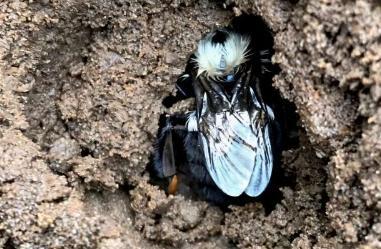
Bumblebee Queens Prefer to Live in a Toxic Home
大黄蜂蜂后选择冬眠地的特殊偏好——杀虫剂
North-facing, sloping ground with loose, sandy soil — if you’re a bumblebee queen on the market for a winter home, these features will have you racing to make an offer.
But scientists were recently stunned to find there’s something else these monarchs like in a place to hibernate: pesticides.
In a paper published last month in the journal Science of The Total Environment, researchers described an experiment that gave common eastern bumblebee queens a choice: hibernate in clean soil, or in soil laced with pesticides. The insects behaved in a way that was the opposite of what was expected.
朝北、斜坡、松散的沙质土壤——如果你是一只寻找过冬住所的大黄蜂蜂王,这些特点一定会让你立刻报价。然而,科学家们最近惊讶地发现,这些蜂中王者在选择冬眠地点时还有另一个意想不到的偏好:杀虫剂。
在上个月发表在《整体环境科学》杂志上的一篇论文中,研究人员描述了一项实验,实验为常见的东部大黄蜂女王提供了两种选择:在干净的土壤中冬眠,或者在含有杀虫剂的土壤中冬眠。这些昆虫的行为与预期截然相反。
☞
bumblebee
英 [ˈbʌmblbiː] 美 [ˈbʌmblbiː]
n. [昆] 大黄蜂
hornet
英 [ˈhɔːnɪt] 美 [ˈhɔːrnɪt]
n. [昆]大黄蜂
☞
hibernate
英 [ˈhaɪbəneɪt] 美 [ˈhaɪbərneɪt]
v. 冬眠;(人)(长期)蛰居,不活动
Animals that hibernate spend the winter in a state like a deep sleep. 冬眠
Dormice hibernate from October to May.
睡鼠从10月到5月冬眠。
☞
研究团队进行了实地实验,让东部普通大黄蜂(Bombusimpatiens)新孵化的蜂后在室外围栏内自由飞翔、交配,然后选择一个地点过冬。
选择的是干净的土壤或被不同浓度的五种常见农药(包括杀虫剂和杀菌剂)之一污染的土壤。
环境科学学院的研究人员随后仔细检查了土壤,寻找冬眠的大黄蜂蜂王。他们发现,蜂王会避开不含杀虫剂的土壤,事实上,被杀虫剂污染的土壤吸引的可能性是不含杀虫剂的土壤的两倍。