超加工食品会引发比低加工食品更大的胰岛素反应,即使它们含有相同的卡路里和营养素。
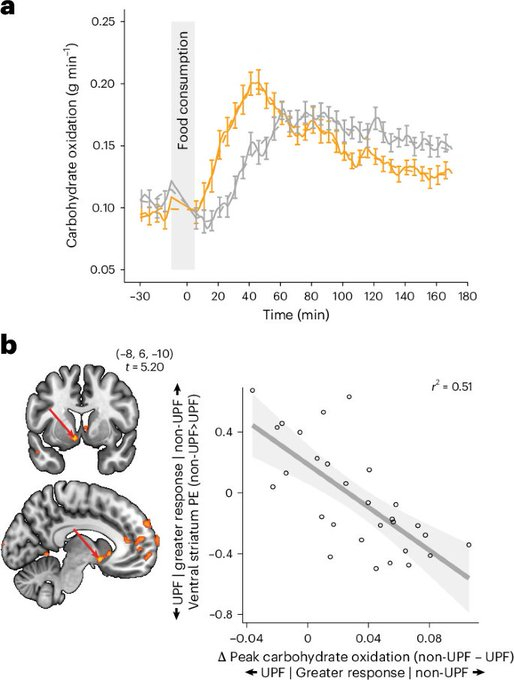
当人们摄入两份蛋白质、碳水化合物、脂肪和纤维含量非常接近的不同餐食时,超加工的那一份尽管整体血糖反应相似,但会产生更大的胰岛素反应。它还会抑制进食后正常向燃烧碳水化合物转变的过程,并改变大脑对进食的反应。
我之前谈过凯文·霍尔(Kevin Hall)的试验,在那里,摄入超加工饮食的人每天多摄入约500卡路里并增加了体重。这项新研究解释了UPFs如此棘手的原因的另一个部分——它表明食物的加工方式会改变我们身体处理它的方式,甚至改变我们大脑对它的感知!
Ultra-processed foods trigger a bigger insulin response than less-processed ones, even when they contain identical calories and nutrients.
When people consumed two different meals matched closely for protein, carbs, fat, and fiber, the ultra-processed one produced a larger insulin response despite a similar overall blood glucose response. It also blunted the normal shift toward burning carbohydrates after eating and changed the brain's response to eating.
I’ve talked before about Kevin Hall’s trial, where people eating an ultra-processed diet consumed about 500 extra calories per day and gained weight. This new study explains another part of why UPFs are so problematic - it shows that the way food is processed can change how our bodies handle it and even how our brains perceive it!
这项研究最重要的细节是,两餐后的总葡萄糖水平相同,而胰岛素在超加工餐后显著升高。葡萄糖监测仪会认为这两餐是等同的。胰岛素显示它们并非如此。这就是为什么测量胰岛素,而不仅仅是葡萄糖,才真正重要。
The most important detail in this study is that total glucose was the same after both meals, while insulin was significantly higher after the ultra-processed one. A glucose monitor would have called these meals equal. Insulin showed they weren't. This is why measuring insulin, not just glucose, matters.