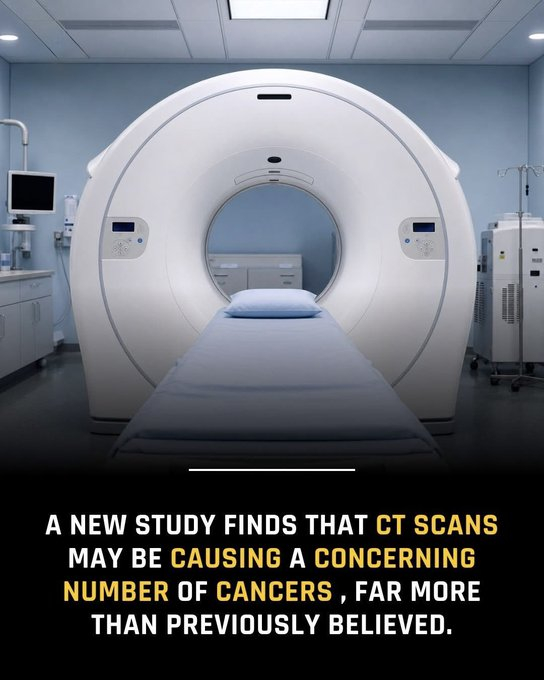
一项2025年的研究发现,CT扫描可能与比许多人预期的多得多的未来癌症病例有关联。
该研究估计,2023年美国进行了约9300万次CT扫描。基于这些扫描的辐射暴露,研究人员预测它们可能导致约10.3万例未来的癌症病例。
这一数字将相当于当年所有新癌症诊断病例的约5%,这使得该问题在公共卫生层面变得重要。
对于大多数人来说,单次CT扫描的风险仍然被认为较低。然而,当每年进行数百万次扫描时,其累积影响可能会变得显著。
婴儿和儿童每次扫描面临更高的风险,因为他们的身体仍在发育,而且他们有更多年份可能出现辐射相关的癌症。
即便如此,大多数预计的癌症病例预计将发生在成人身上。这主要是因为成人总体上接受了更多的CT扫描。
与CT相关辐射最常预测的癌症包括成人肺癌、结肠癌、白血病和膀胱癌。在儿童中,该研究指出甲状腺癌、肺癌和乳腺癌是重要的担忧。
专家表示,CT扫描可以救命,当真正需要时不应避免。问题是进行不必要的扫描或使用超出清晰结果所需的辐射量。
主要信息是,医生应谨慎开具CT扫描,避免进行医学上不必要的扫描,并使用最低辐射剂量,同时仍能提供有用的图像。
A 2025 research study found that CT scans may be linked to a much larger number of future cancer cases than many people expected.
The study estimated that about 93 million CT scans were performed in the United States in 2023. Based on radiation exposure from those scans, researchers projected that they could contribute to about 103,000 future cancer cases.
That number would equal roughly 5% of all new cancer diagnoses from that year, making the issue important at a public health level.
The risk from a single CT scan is still considered low for most people. However, when millions of scans are done each year, the combined impact can become significant.
Infants and children face a higher risk per scan because their bodies are still developing and they have more years ahead for radiation-related cancers to appear.
Even so, most of the projected cancer cases are expected to occur in adults. This is mainly because adults receive far more CT scans overall.
The cancers most often predicted from CT-related radiation include lung cancer, colon cancer, leukemia, and bladder cancer in adults. In children, the study pointed to thyroid, lung, and breast cancers as important concerns.
Experts say CT scans can be lifesaving and should not be avoided when they are truly needed. The concern is unnecessary scanning or using more radiation than needed for a clear result.
The main message is that doctors should order CT scans carefully, avoid scans that are not medically necessary, and use the lowest radiation dose that still gives useful images.